Why Real-Time Workforce Visibility is a Competitive Advantage
TL;DR
Organizations with live attendance data make faster, more confident decisions. Here is what the competitive gap looks like, and how to close it.
Want to see TimeGate in action for your team?
Get in Touch →The decision-making lag that most companies ignore
Imagine it is Tuesday morning. Your operations manager at Branch 3 calls to say they are short-staffed, three people did not show up and there is a large order to fulfill. By the time you identify who is available, confirm they can cover, and arrange for them to travel to Branch 3, it is 11 AM. Half the morning is gone.
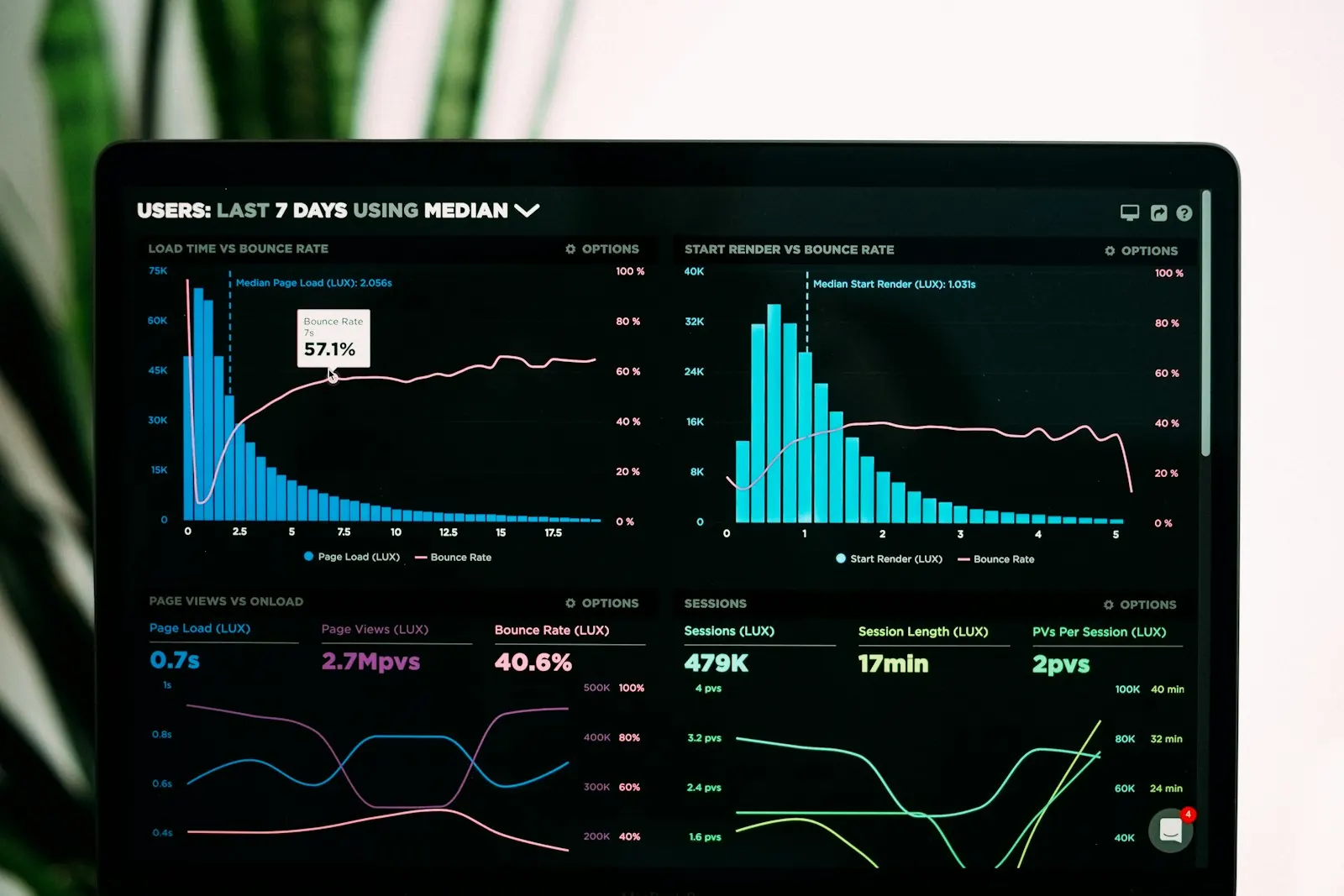
Now imagine you had looked at your workforce dashboard at 8:15 AM and seen, automatically, that Branch 3 had a 30% check-in shortfall. You called Branch 2 at 8:20. Coverage was arranged by 8:40. The morning shift ran normally.
The difference between those two scenarios is not the skill of your operations team. It is the speed of your information.
This is what real-time workforce visibility means in practice, and why companies that have it consistently outperform those that do not.
What "real-time" actually means for workforce data
Real-time does not mean "refreshes every hour." For workforce data to drive operational decisions, it needs to update within seconds of the triggering event:
- An employee checks in → the dashboard updates immediately
- A branch hits 70% attendance → an alert fires to the branch manager
- A shift ends without a check-out → the system flags the anomaly before payroll is affected
Most traditional attendance systems update daily, or worse, require manual data entry that is done at the end of the week. That is not real-time. That is a historical record with a significant lag. You are not managing your workforce; you are auditing what already happened.
Five decisions that improve when you have live workforce data
1. Same-day staffing adjustments
When you know by 9 AM that a branch is understaffed, you can act the same morning. When you find out on Thursday that Monday's Branch 3 was running at 60% capacity, you can only document the failure, you cannot fix it.
Operations managers who have live data describe this as the single biggest operational benefit: the shift from reactive firefighting to proactive resource management.
2. Overtime and coverage decisions
Without real-time data, overtime is often approved reactively, a manager calls HR at 5 PM to say the team needs two extra hours. With live visibility, the operations team can see before 2 PM that the current shift is not going to complete on schedule, request coverage proactively, and approve overtime before it becomes an emergency.
This also reduces unauthorized overtime, one of the most common payroll expense control failures in multi-branch businesses.
3. Pattern recognition
Real-time data creates a historical record that makes patterns visible quickly. If Branch 4 has a Monday attendance problem that has been happening every week for six weeks, that shows up clearly in a dashboard with daily data. In a manual system where branch sheets arrive consolidated at month-end, that pattern is invisible until it becomes serious.
4. HR investigations
When an employee disputes a payroll deduction or a manager disputes an attendance record, the investigation typically involves pulling records from multiple sources, cross-referencing them, and trying to reconstruct what actually happened two weeks ago.
With real-time, timestamped check-in records (including GPS coordinates and device information) the investigation takes minutes, not days. The record is either there or it is not. There is no "I checked in but it wasn't recorded" when the system shows the exact time and location of every check-in attempt.
5. Leave and absence correlation
Live workforce data makes it possible to correlate absence patterns with other operational variables: which departments have higher absence rates before month-end? Which shifts have the highest no-show rates? Which managers have the best team attendance records, and what are they doing differently?
These are not questions you can answer from a spreadsheet. They require a system that captures data consistently and makes it queryable.
The hidden cost of workforce data lag
Most companies do not measure the cost of operating with delayed attendance data because it is invisible, it shows up as "lost productivity," "overtime costs," and "payroll disputes" rather than being attributed to the actual cause.
Here is a rough model for a company with 200 employees across 8 branches:
| Cost Category | Annual Estimate |
|---|---|
| Manager hours spent on attendance admin | AED 180,000 |
| Payroll error corrections and disputes | AED 45,000 |
| Avoidable overtime from slow staffing decisions | AED 90,000 |
| HR investigation time for attendance disputes | AED 35,000 |
| Total | AED 350,000+ |
Against that, a workforce management platform that provides real-time visibility typically costs AED 20,000 to 60,000 per year for a 200-person company. The ROI is not a close call.
What real-time visibility requires technically
Real-time workforce visibility is not complicated to implement, but it requires the right building blocks:
Mobile-first check-in: Employees need a check-in mechanism that works from where they are. Paper registers and offline systems cannot feed a real-time dashboard.
Instant sync: Check-in data needs to travel from the employee's device to the central system within seconds, not in batches. This requires a platform built for real-time sync, not a legacy system with an end-of-day export.
Role-appropriate dashboards: The CEO does not need to see the same data as the Branch 3 manager. Role-based access ensures each person sees what is relevant to their decisions, branch managers see their branch, HR sees the company, operations sees the exception alerts.
Configurable alerts: The value of real-time data is wasted if managers have to check the dashboard constantly to catch exceptions. Alert thresholds ("notify me if check-ins are below 75% at 30 minutes past shift start") automate the monitoring so managers only get notified when action is required.
TimeGate provides all four of these components in a single platform, without requiring IT infrastructure changes or hardware installations.
FAQ
Does real-time tracking mean employees are constantly monitored?
No. TimeGate records the moment of check-in and check-out. It is not continuous location tracking. The GPS validation happens only at the moment of the check-in event and is used solely to verify that the employee is at the correct branch location. Employees are not tracked between check-in and check-out.
What happens if the internet is down at a branch?
TimeGate's mobile app queues check-ins locally and syncs automatically when connectivity is restored. In practice, this means the central dashboard may have a short lag during a connectivity outage, but no records are lost.
Can we set different alert thresholds for different branches?
Yes. Each branch can have its own alert configuration, different thresholds, different notification recipients, and different timing. A branch with a known late-arrival culture might have a 45-minute grace window; a branch with strict shift requirements might alert at 10 minutes.
How does real-time visibility integrate with our payroll process?
At the end of each pay period, TimeGate generates a payroll-ready attendance report. Because the data is already accurate and validated in real time throughout the period, the report is produced automatically, no manual reconciliation required.
Conclusion
Real-time workforce visibility is not a luxury for large enterprises. It is the operational foundation that allows any multi-branch company to make decisions with current information instead of historical guesses.
The companies that have it move faster, waste less money on avoidable costs, and spend their HR and management capacity on forward-looking work instead of data archaeology.
If you want to see what real-time visibility looks like for your specific operation, reach out and we will walk you through it →
Ready to simplify attendance and leave for your workforce?
Get in Touch ↗